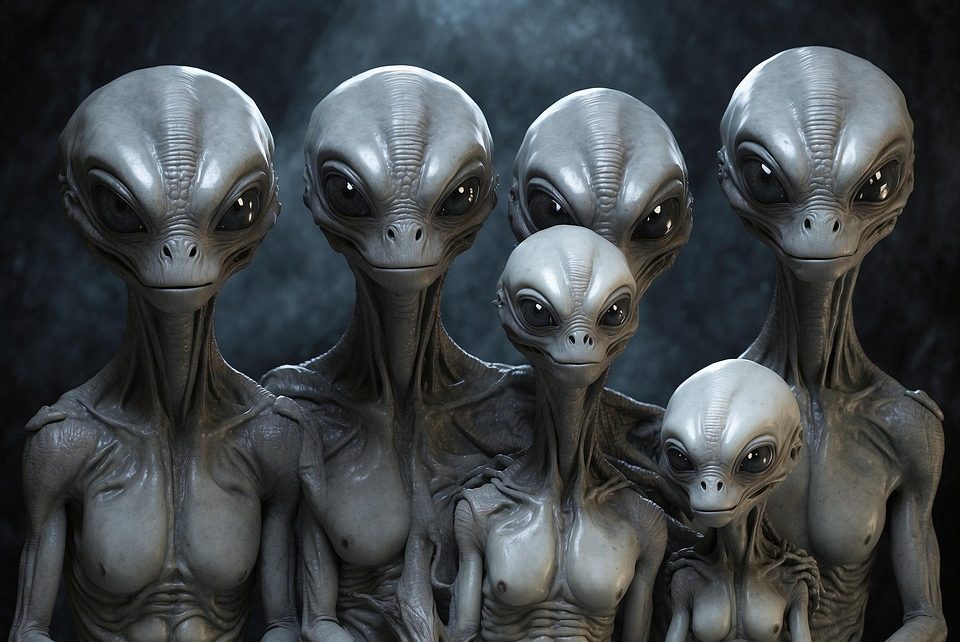
A single unsettling image has ignited a wave of online speculation after appearing across discussion boards and social platforms. The picture appears to show a group of smooth-skinned, large-eyed humanoid beings posed together in what many users are calling an “alien family portrait.”

Within hours of circulation, theories multiplied.
Some viewers claimed the image resembled a formal interspecies gathering. Others suggested it looked like a leaked frame from an unreleased science-fiction project. A smaller but louder corner of the internet declared it evidence of extraterrestrial contact.
But there is a much simpler explanation.
Visual analysis strongly suggests the image is stylized digital artwork or AI-generated imagery, not documentary photography.
That hasn’t slowed the speculation.
The composition shows five humanoid figures arranged in a portrait-like formation. Their features follow familiar pop-culture conventions often associated with so-called “Grey aliens”: enlarged craniums, oversized dark eyes, narrow necks, minimal facial structures, and smooth grey skin. The figures are posed with surprising symmetry and calm expressions, giving the scene an uncanny “family photo” atmosphere.
Online commenters quickly began assigning roles.
“Two parents, three children.”
“No — it looks diplomatic.”
“They seem too comfortable in front of the camera.”
The more elaborate theories suggested that the differences in size indicate age groups, social hierarchy, or even a staged public appearance from another civilization.
One viral post claimed the image revealed “proof that humanity has already been introduced to non-human visitors.”
No evidence accompanied the claim.
Digital artists and image analysts pointed to several details that commonly appear in generated artwork: unusually uniform skin textures, highly controlled lighting, repeated anatomical patterns, and a cinematic composition designed for emotional impact rather than realism.
Still, the emotional reaction has been undeniable.
Part of what makes images like this spread so quickly is that they tap into long-running cultural expectations about what extraterrestrials are “supposed” to look like. The visual language is already familiar through decades of movies, television, games, and speculative fiction.
Viewers recognize the silhouette instantly.
That recognition can create the impression that something feels authentic even when it is fictional.
Psychologists sometimes refer to this as pattern completion — people naturally fill in missing information and build stories from ambiguous visuals.
And this image gives plenty of room for imagination.
Are they posing?
Are they observing?
Why does the smallest figure appear positioned near the front?
Questions like these encourage narrative creation, which fuels sharing.
Meanwhile, skeptics pushed back sharply.
Several users noted that if an actual extraterrestrial encounter had occurred, a single polished portrait would be among the least likely forms of evidence. Authentic documentation would normally involve context, metadata, multiple viewpoints, independent verification, and traceable origins.
Instead, this image offers none of those.
Only atmosphere.
Only mystery.
Only the illusion that something impossible might have quietly stepped into frame.
That hasn’t stopped entertainment channels and conspiracy communities from repackaging the image with dramatic headlines:
- “THEY FINALLY REVEALED THEMSELVES”
- “ALIEN FAMILY DISCOVERED”
- “WHAT GOVERNMENTS AREN’T TELLING YOU”
Yet beneath the sensational framing, the picture succeeds for a different reason.
It triggers curiosity.
Not because it proves anything — but because it resembles the stories humans have told for generations about who might exist beyond Earth.
In the end, the image remains what it appears to be: a fictional or digitally created depiction of alien-like beings.
No confirmed extraterrestrial discovery.
No verified encounter.
Just an eerie portrait that briefly convinced people to imagine what would happen if the impossible looked directly into the camera.