A Witness Captured a REAL UFO on Camera – What Happened Afterward Remains Inexplicable
BREAKING UFO NEWS — One unexpected moment, one camera pointed toward the sky, and an image that raises more questions than answers. Reports of witnesses capturing unidentified flying objects continue to attract worldwide attention, especially when the events surrounding a recording appear just as mysterious as the object itself. What began as an ordinary observation can quickly become an extraordinary story when an unfamiliar shape appears overhead, behaves in an unexpected way, and leaves the person recording it struggling to explain what happened. But what really happens after someone captures a possible UFO on camera?
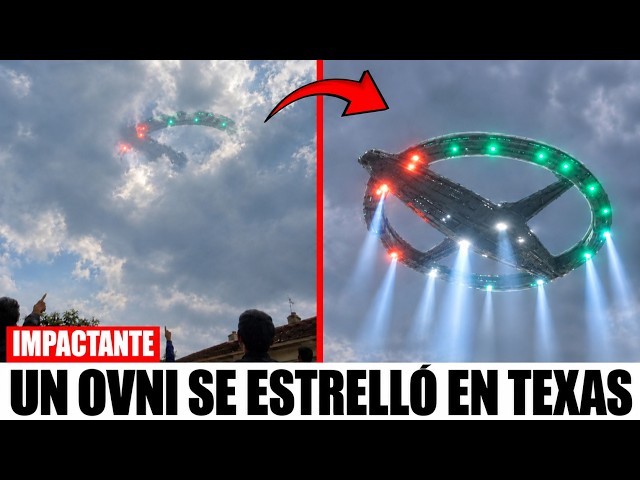
Imagine witnessing something unusual while going about an ordinary day. You look toward the sky and notice an object that does not immediately resemble a familiar aircraft. It may appear as a bright light, a dark silhouette, or a strangely shaped object moving against the clouds. At first, you might assume it is a plane or helicopter. But then you notice something that makes you stop and look again. Its apparent movement seems unusual, its shape is difficult to identify, or its position appears to change in a way you cannot easily explain.
You reach for your phone and begin recording.
Within seconds, an ordinary afternoon becomes a moment you may remember for the rest of your life. The object remains visible long enough for you to capture several seconds of footage, but then something unexpected happens. It disappears behind the clouds, moves beyond the camera’s field of view, or becomes too distant to distinguish. You review the recording, hoping it will provide an answer. Instead, the footage creates even more questions.
This is the type of scenario that makes UFO videos so compelling. The camera appears to preserve a moment that the human eye could not fully understand in real time. Yet recording an unidentified object does not automatically reveal what it is. A video can document an observation, but identifying the object requires additional information.
The word UFO simply means unidentified flying object. In official discussions, the term UAP, or unidentified anomalous phenomena, is increasingly used to describe observations that have not yet been identified. Neither term automatically means extraterrestrial spacecraft. An unidentified object may eventually turn out to be an aircraft, balloon, drone, satellite, atmospheric effect, or another familiar phenomenon.
Still, some recordings remain difficult to interpret, particularly when they lack important details. A witness may describe an object as moving extremely fast, hovering without making a sound, or suddenly changing direction. These descriptions can be sincere, but human perception is not always reliable when judging distance, speed, and size in the sky. Without fixed reference points, an object moving slowly at a great distance can appear to accelerate dramatically. Camera movement and digital zoom can also create the impression of unusual motion.
What happens after the recording is captured can be just as important as the original sighting. A witness might share the footage with friends, upload it to social media, or contact an organization that collects reports of unusual aerial activity. Other viewers may attempt to identify the object by comparing its shape and movement with known aircraft. Some may suggest drones or balloons, while others may believe the recording shows something much more unusual.
As the video spreads, its original context can become increasingly difficult to preserve. Short clips are frequently cropped, compressed, edited, or reposted with new captions. A description that begins as an uncertain observation can eventually become a confident claim about an extraordinary encounter. This is why investigators place so much importance on obtaining the original recording rather than relying only on a version circulating online.
The strongest investigation would begin with several basic questions. Where exactly was the object observed? What time did the sighting occur? How long was it visible? In which direction was the camera pointing? Was the witness standing still or moving inside a vehicle? Were other people present? Did anyone else record the same object from a different location?
These details may sound ordinary, but they can make the difference between an interesting video and useful evidence. The original file may contain metadata that helps establish when and how it was recorded. Additional footage from different angles could help researchers estimate the object’s distance and trajectory. Weather reports and aviation records might reveal whether conventional aircraft or atmospheric conditions could explain the observation.
There is also the question of what happened immediately after the sighting. Did the witness notice anything else unusual? Did the object disappear suddenly, or was it simply lost from view? Were there additional lights in the area? Did other observers report a similar event? These questions are important because dramatic descriptions can sometimes conceal ordinary explanations. An object disappearing behind a cloud, for example, is not the same as an object vanishing instantaneously.
In recent years, public interest in UAP investigations has increased. Military pilots, civilian observers, and aviation professionals have reported objects they could not immediately identify. Some cases have attracted official attention, while others remain unresolved because the available information is insufficient. The United States established the All-domain Anomaly Resolution Office, known as AARO, to examine reports involving unidentified phenomena across different operating environments.
The existence of official investigations does not mean that every unusual video represents advanced technology or extraterrestrial activity. Rather, it demonstrates that unexplained observations can be examined through systematic procedures. Investigators must consider ordinary explanations, evaluate the quality of available information, and distinguish between what a witness observed and what can actually be established.
One of the most interesting aspects of modern UFO research is the growing number of cameras pointed toward the sky. Smartphones, security cameras, vehicle dashcams, and professional recording equipment have made it easier than ever to capture unexpected aerial activity. However, more cameras do not necessarily mean more definitive answers. Many devices are designed to record everyday scenes rather than distant objects moving through the atmosphere. Small targets can become blurry, distorted, or difficult to track.
Could a witness really capture evidence of something that humanity has never encountered before? It is a possibility that keeps many people interested in the subject, but proving it would require much more than a mysterious silhouette or a few seconds of unusual footage. Researchers would need independent confirmation, reliable sensor information, and evidence that cannot be explained by known objects or recording effects.
The possibility of life beyond Earth remains a legitimate scientific question. Astronomers have discovered thousands of planets beyond our solar system, and researchers are studying distant worlds for conditions that might support life. Scientists are also investigating possible biosignatures in planetary atmospheres and exploring environments within our own solar system that may contain liquid water beneath their surfaces. These efforts make the search for extraterrestrial life more exciting than ever, but they have not established that intelligent visitors are responsible for UFO sightings.
Perhaps the most fascinating mystery is not simply what appeared in the recording, but how a brief observation can change the way a person sees the sky. After witnessing something unfamiliar, ordinary aircraft may suddenly attract more attention. Distant lights become interesting. Clouds and unusual reflections invite closer inspection. The witness may continue searching for an explanation long after the original event has ended.
That search is exactly why careful documentation matters. If someone captures a possible UFO, preserving the original footage, recording the time and location, and gathering independent witness accounts are among the most useful steps. Rather than immediately declaring the object extraterrestrial, investigators can examine the evidence and determine whether a reasonable explanation exists.
For now, the headline describes a compelling scenario, but without a specific authenticated recording or independently verified account, the details of the supposed encounter and what happened afterward cannot be confirmed. The object should therefore remain unidentified rather than being presented as proof of an alien presence.
One thing is certain: a mysterious object captured on camera can start a worldwide conversation, but only reliable evidence can reveal what was actually there.
What would you do if you captured a strange object in the sky and then witnessed something even more inexplicable moments later? Would you immediately share the video with the world, or would you investigate it privately first? Let us know what you think in the comments!