NASA Put Spiders in Zero Gravity—Then Something Strange Happened

When NASA sent spiders into space, scientists expected microgravity to disrupt one of nature’s most precise construction projects: the orb web. What happened was far stranger and more revealing. On Earth, web-building spiders normally use gravity as a directional guide, creating asymmetrical webs whose hubs sit slightly above the center.
The spider typically waits facing downward, allowing gravity to help it move rapidly toward trapped prey. In orbit, however, there is no meaningful “up” or “down,” raising a fascinating question: could spiders still organize and build without the force that had guided their species throughout evolution? NASA first explored the idea during the Skylab 3 mission in 1973, when two spiders named Arabella and Anita were carried aboard as part of a student-designed experiment.
They initially produced irregular webs but gradually adapted, proving that spiders could spin functional silk structures in microgravity. Decades later, researchers conducted a more detailed experiment aboard the International Space Station using golden orb-web spiders housed in specially designed habitats. Cameras recorded their behavior while fruit flies provided prey, and matching spiders on Earth served as controls.
The space webs were generally more symmetrical than those produced under normal gravity, and the spiders did not consistently face in one direction. But researchers noticed an unexpected pattern: when the habitat’s lights were switched on, the spiders often constructed their webs with the hub closer to the light source and waited facing away from it. When the lights were off, their orientation became much less predictable.
The conclusion was remarkable—without gravity, the spiders appeared able to use light as a substitute reference direction. A scientific analysis of the experiment found that illumination could guide both web construction and the spider’s position while waiting for prey. In other words, the animals did not simply become confused in space; they switched to another environmental signal and reorganized their instinctive behavior.
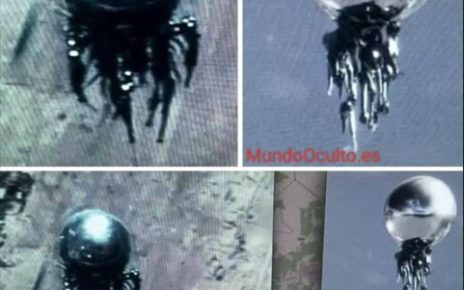
The result demonstrates that actions that appear rigidly programmed may actually be flexible combinations of several sensory cues. Scientists also had to overcome unexpected complications during the experiment, including difficulty identifying the spiders’ sex when they were young and managing a rapidly growing fruit-fly population inside the habitat. Yet the animals continued building, repairing and occupying their webs during weeks in orbit. NASA’s experiment did not produce giant mutant spiders or mysterious extraterrestrial silk, despite sensational images that sometimes accompany the story.
Its real discovery was more scientifically important: an animal with a tiny nervous system could adapt a complex behavior to an environment no member of its species had encountered naturally. The experiment offers broader clues about how living organisms prioritize sensory information when familiar forces disappear. It may also help researchers understand biological adaptation during long-duration spaceflight. What looked at first like a strange failure of web design became evidence of astonishing behavioral flexibility—when gravity vanished, the spiders effectively turned light into their new “down.”