3 MINUTES AGO: James Webb Just Changed Everything We Know About the Universe
The James Webb Space Telescope has pushed humanity’s view deeper into cosmic history with the confirmation of MoM-z14, an extraordinarily distant galaxy observed as it existed only about 280 million years after the Big Bang.
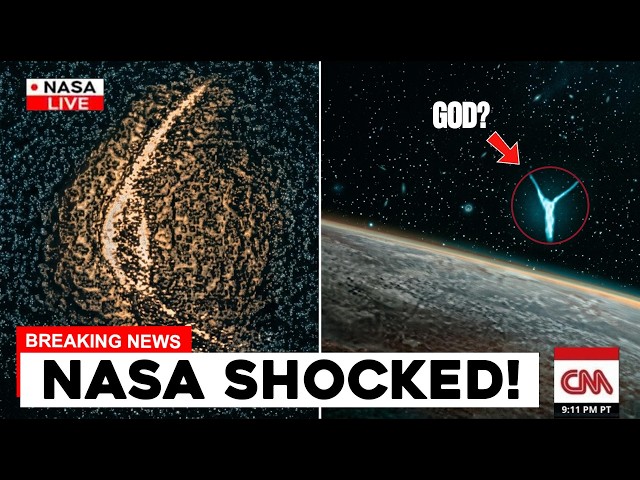
Although dramatic headlines claim that the discovery happened “three minutes ago” and changed everything scientists know about the universe, NASA announced the result on January 28, 2026—and its real significance is more fascinating than the supernatural scene suggested by the viral thumbnail.
Using Webb’s Near-Infrared Spectrograph, astronomers measured MoM-z14 at a redshift of 14.44, confirming that its light traveled through expanding space for approximately 13.5 billion years before reaching the telescope. In effect, Webb is showing researchers a period when the universe was only around two percent of its present age.
What stunned astronomers was not simply the galaxy’s distance, but its unexpected brightness and chemical composition. MoM-z14 belongs to a growing population of brilliant early galaxies that appear far more numerous than theories developed before Webb’s launch predicted—by one research estimate, as many as 100 times more numerous.
The galaxy also contains surprisingly high levels of nitrogen, an element normally associated with several generations of stellar evolution. Yet at this extremely early stage of cosmic history, conventional models suggest that there should not have been enough time for ordinary generations of stars to create so much of it. One possible explanation is that the young universe produced enormously massive stars unlike most stars seen today, allowing chemical enrichment to occur at an extraordinary rate.
MoM-z14 also appears to have begun clearing away the dense fog of neutral hydrogen that once filled the early universe, offering an important clue about reionization—the transformation that eventually allowed light to travel freely across the cosmos. These findings do not disprove the Big Bang, overturn the known age of the universe or reveal a divine figure in space.
NASA explicitly explains that Webb’s observations have generated new questions without contradicting the strongest foundations of modern cosmology. The human-shaped light shown in the thumbnail is therefore an artistic or digitally manipulated element, not an authentic Webb observation.
Real Webb deep-field images usually show ancient galaxies as tiny colored points or faint smudges whose properties must be decoded through spectroscopy. Nevertheless, the scientific story is genuinely revolutionary. Webb is revealing that galaxies, stars and possibly even supermassive black holes developed faster than many researchers expected.
In a separate discovery, the observatory found evidence of a roughly 50-million-solar-mass black hole dominating a small object that existed only 700 million years after the Big Bang, raising the possibility that some giant black holes formed before their host galaxies. Webb has not found a supernatural being at the edge of space, but it has uncovered something equally profound: the infant universe was already active, chemically complex and capable of building enormous structures with astonishing speed—and the opening chapters of cosmic history may require substantial revision.